The Real Cost of Substation Transformer Failures
What a failure actually costs, MV to HV. What the planned alternative costs. Where the difference really sits.

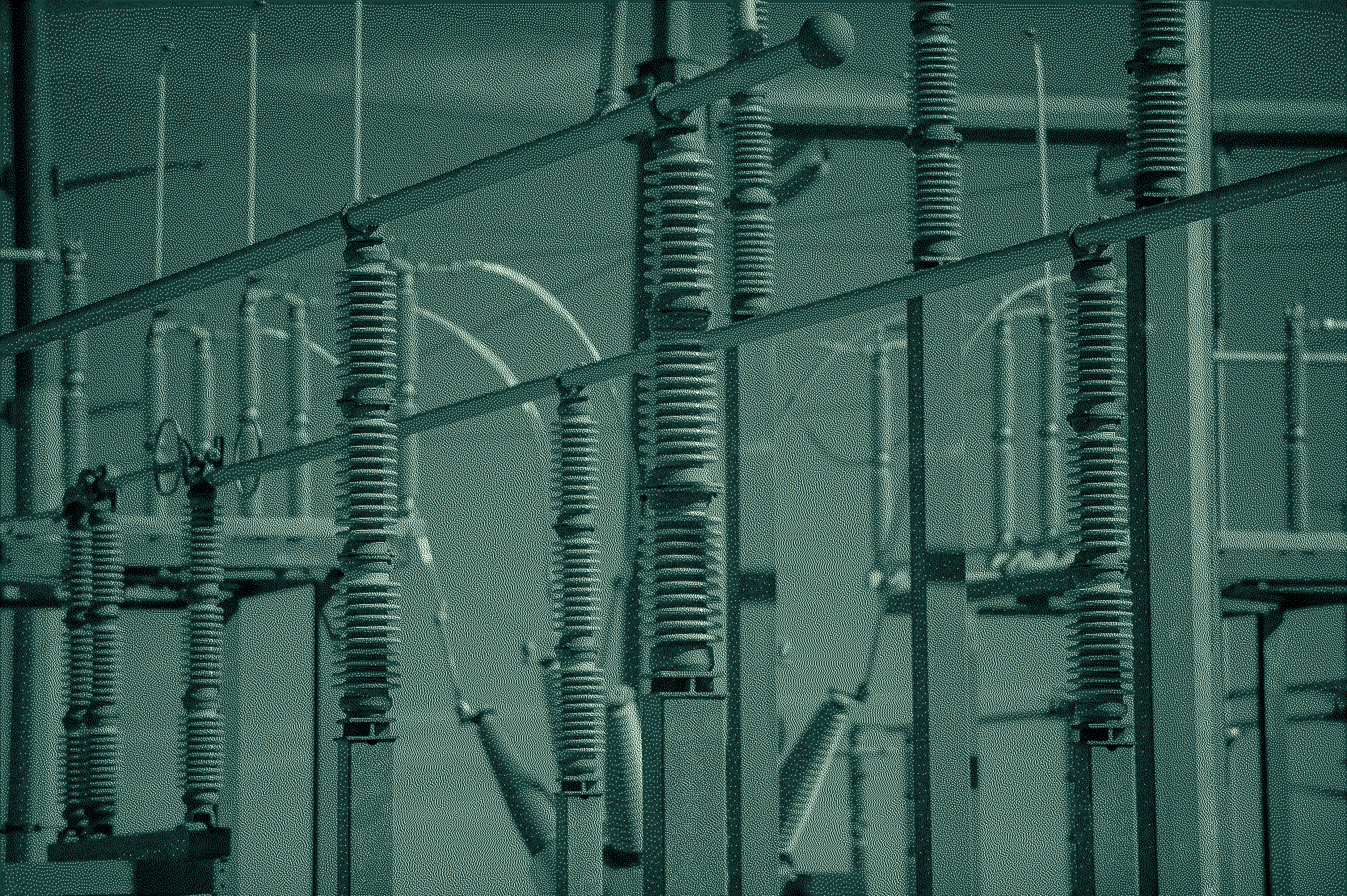
When a substation transformer fails, the financial impact on an electric utility goes far beyond the price tag of a new unit.
Executive Summary
An unplanned failure triggers a capital-intensive logistical chain: emergency bridge power, specialized heavy-haul transport, environmental containment, and labor-intensive field engineering, all executed on a clock the utility does not control.
Modeled on the line items in Section 2, the net cost of an unplanned failure runs approximately $836,000 to $1,976,000 for a medium voltage asset and $2,815,000 to $6,328,000 for a high voltage asset, after salvage recovery. Catastrophic events involving tank rupture, fire, or collateral damage to adjacent equipment sit outside these ranges and can exceed $10,000,000.
The widely repeated claim that an emergency failure costs three times a planned replacement needs a correction, and the correction matters. On total delivered cost the multiple is approximately 1.5x to 1.8x, because the transformer itself costs roughly the same whether the utility buys it on schedule or under duress. On execution cost, meaning everything except the transformer, the multiple is approximately 3.3x to 4.6x. Section 4 shows both calculations.
Two structural facts drive the gap. First, bridge power. A mobile transformer or mobile substation rented across a multi-month restoration is the single largest non-equipment line item, and at high voltage it alone exceeds half a million dollars. Second, the procurement queue. New power transformer lead times now run well beyond two years, so the value of early warning is measured against manufacturing lead time, not against repair time.
Scope and Voltage Class Definitions
Voltage class terminology in this document follows ANSI C84.1 and IEEE C57.12.00 conventions, which do not always match casual industry usage.
Medium voltage (MV). Nominal system voltage above 1 kV and up to 69 kV. Substation units in this class typically run 1 MVA to 50 MVA, stepping sub-transmission down to distribution. Common North American classes are 12.47 kV, 13.8 kV, 24.9 kV, and 34.5 kV. The 11 kV class common in IEC markets is treated as equivalent.
High voltage (HV). Nominal system voltage of 115 kV to 230 kV. Substation and transmission units in this class typically run 50 MVA to 200 MVA.
Extra high voltage (EHV). 345 kV and above. EHV units are excluded from the cost model below. Their capital cost, transport constraints, and outage consequences all sit above the HV ranges shown, and generalizing across the two classes produces misleading numbers.
All figures are in 2026 US dollars and assume a North American utility operating context. Costs are stated as ranges, not point estimates, because the dominant variables are site-specific: access, spare availability, network topology, and regulatory jurisdiction.
Unplanned Failure: Cost Breakdown
The table below models the total cost to the utility of an unplanned in-service failure requiring full replacement, from the moment of the event through re-energization of the replacement unit. The model assumes a matched spare is available and restoration is bounded by transport and commissioning. Downstream customer economic loss is not included here; it is addressed separately in Section 7 because it is not a utility cost.
A note on lost energy sales. For a revenue-decoupled utility, and roughly half of US states now operate some form of decoupling or lost-revenue adjustment, throughput shortfalls are trued up through rates and are not a loss to the utility. Only congestion, redispatch, and replacement power costs, which are real cash outflows, are carried above. For the same reason, power factor penalties are not included: those are assessed by a utility on a customer, not incurred by the utility on its own asset.
Planned Replacement: Cost Breakdown
The same asset, replaced proactively on a schedule the utility sets. The transformer costs the same. Almost nothing else does.
Planned Versus Unplanned: What the Multiple Actually Is
Comparing the two tables on a total-cost basis understates the operational difference, because the transformer itself dominates both columns and does not change. Comparing on an execution-cost basis, meaning every line except the transformer, isolates the part of the spend that condition awareness actually influences. Both views are shown below.
There is also a cost this table does not capture. Under a planned program the utility chooses when to enter the procurement queue. Under an unplanned failure the queue length becomes the outage duration, which is the subject of Section 6.
Asset Salvage Recovery
A utility recovers part of the capital outlay by scrapping the failed unit. Decommissioned transformers contain recoverable copper or aluminum windings, electrical steel, and tank steel. Copper-wound units recover substantially more than aluminum-wound units of the same rating.
Scrap value tracks the exchange copper price at a discount, because transformer windings are varnished, paper-wrapped, and oil-contaminated, and therefore grade below bare-bright copper. Exchange copper traded in a range of roughly $5.50 to $6.20 per pound through the first half of 2026 (Ref. 9). Applying a typical scrap discount, recovery on the windings alone has been running in the range of $3.75 to $4.75 per pound, with the total recovery driven almost entirely by winding mass.
Modeled recovery is $10,000 to $40,000 for an MV unit and $40,000 to $100,000 or more for an HV unit. Two cautions apply. Recovery is net of demolition, transport, and any PCB-driven handling obligation, which in contaminated units can exceed the scrap value outright. Note that commodity prices move.
Restoration Timelines and the Procurement Queue
When an unplanned failure occurs at transmission scale, the duration of grid vulnerability is governed by whichever of two clocks is longer: transport and commissioning of an available spare, or manufacture of a new unit.
6.1 If a Matched Spare Exists
Restoration is bounded by transport, site preparation, installation, and commissioning. This is where the 6 to 16 week planning window used in this document comes from, with 12 weeks used as the central case for HV. The spare must be a genuine electrical and physical match: impedance, vector group, tap range, bushing configuration, and footprint. Utilities routinely discover that a nominally available spare is not installable at the failed location.
6.2 If No Matched Spare Exists
Restoration is bounded by manufacturing lead time, and that clock has changed materially. Wood Mackenzie's 2025 supply chain survey put power transformers at an average of 128 weeks and generator step-up units at 144 weeks; its 2026 read placed substation units above 160 weeks, with the largest high voltage units reaching approximately four years (Ref. 2, 3). Multiple market sources through 2026 describe lead times extending to four years or beyond for tier-one HV units (Ref. 4, 5). Thus, the operative planning figure is 2 to 4 years for a new HV unit, longer for the largest classes.
The consequence for asset strategy is direct. Early identification of a developing fault is only valuable if it arrives before the procurement decision has to be made. Against a 128-to-160-week queue, warning measured in weeks changes very little. Warning measured in quarters changes the entire posture, because it converts the replacement from a forced outage into a scheduled capital project.
Downstream Customer Economic Loss
Loss to end-use customers is not a utility cost and is not included in Sections 2 or 3. It is included here because it drives regulatory attention, large-customer relationships, and, in industrial and data center contexts, the customer's own willingness to fund monitoring on utility-side or customer-owned assets.
Utilities typically restore service to most affected load within hours to days by rerouting through adjacent circuits or deploying a mobile substation. The transformer replacement itself proceeds behind that restoration. Sustained multi-hour loss to a single large industrial customer is therefore the exception rather than the norm, but it is the case that generates the largest numbers.
Per-hour outage cost varies across roughly two orders of magnitude by process type. Discrete manufacturing with restartable lines sits at the low end. Continuous-process facilities, where an unplanned stop scraps in-process material and requires a controlled restart, sit far higher: refining, chemicals, primary metals, pharmaceutical sterile fill, and semiconductor fabrication are the standard examples.
The Burdened Cost of a Maintenance Truck Roll
To prevent the outcomes above, utilities rely on periodic preventive maintenance: visual inspection, infrared thermography, and dissolved gas analysis oil sampling interpreted per IEEE C57.104 (Ref. 7). NFPA 70B now frames this maintenance as a standard rather than a recommended practice (Ref. 10). Every one of those activities requires physically dispatching a crew.
A utility that estimates a truck roll from labor and fuel alone typically lands at $150 to $500. That figure omits most of the cost. The buildup below is modeled, not sourced, and should be replaced with the utility's own fully burdened rates.
The number that matters is not the unit cost but the annual total. At two to four scheduled dispatches per substation per year, a 200-substation fleet carries roughly $400,000 to $1,200,000 in annual dispatch cost before a single emergency response. Where a dispatch closes as no fault found because the crew had no condition data before leaving the yard, that cost is entirely sunk.
How Continuous Monitoring Changes the Math
The cost model above identifies exactly three places where continuous condition monitoring changes a number. It is worth being precise about them, because monitoring does not change most of the line items and claiming otherwise is not credible to a utility reviewer.
9.1 It Moves Spend From the Unplanned Column to the Planned Column
This is the entire argument. Monitoring does not make a transformer last longer and does not reduce the price of the replacement unit. What it does is give the utility enough advance notice to execute the replacement on its own schedule. Per Section 4, that shift is worth roughly three-to-five times on execution cost, and the largest single component of it is avoiding a multi-month mobile substation rental.
9.2 It Converts Lead Time From a Constraint Into a Plan
Against a 128-to-160-week manufacturing queue, the operative question is not how fast a utility can respond to a failure but how far ahead of one it can commit capital. A developing fault identified several quarters before functional failure lets the utility enter the procurement queue, secure a delivery slot, and stage the outage. The same fault identified at failure leaves the utility choosing between a multi-year wait and whatever spare it can source on the open market.
9.3 It Removes the No-Fault-Found Dispatch
Periodic testing tells a utility the condition of an asset on the day of the test. Continuous monitoring provides temporal coverage between tests, which is what determines whether a developing fault is observed at all. It does not replace the diagnostic depth of an oil sample or an offline electrical test. What it does is tell the crew which assets warrant a dispatch and which do not, which converts a calendar-driven dispatch schedule into a condition-driven one.
9.4 What Monitoring Does Not Do
It does not predict a date of failure. VIE reports asset condition and its rate of change. The operator sets action thresholds.
It does not remove the need for oil analysis, offline electrical testing, or periodic inspection. It changes their frequency and their targeting.
It does not shorten manufacturing lead time. It changes when the utility enters the queue.
VIE's approach is a physics-based virtual model of each transformer, constructed from the unit's approximate geometry and refined against every sample taken. It is not a learned baseline. This distinction matters for the argument above: a model that learns what normal looks like from the asset's own recent history can silently absorb a slowly developing fault as the new normal. A physics-based model cannot, because the reference is the physics of the machine rather than its recent behavior.
Basis of Estimate and Limitations
Figures in this document fall into three categories. Readers and reviewers should treat them differently.
Sourced
Transformer manufacturing lead times (Section 6). Wood Mackenzie survey data and subsequent trade reporting, Ref. 2 through 5. Exchange copper pricing (Section 5). Ref. 9. Voltage class definitions (Section 1). ANSI C84.1 and IEEE C57.12.00, Ref. 6. Regulatory and standards references (Sections 2, 8). 40 CFR Part 761, IEEE C57.104, NFPA 70B, Ref. 7, 8, 10.
Modeled
The following are planning estimates built from typical North American utility cost structures. They are internally consistent and auditable against the stated day rates and percentages, but they are not survey data and are not presented as such.
- All line items in the Section 2 and Section 3 cost tables.
- Mobile transformer day rates and bridge durations. Day rates vary widely by region, unit availability, and rental term.
- Grid reconfiguration and regulatory exposure. Highly jurisdiction-dependent.
- The truck roll buildup in Section 8, including dispatch frequency.
- Scrap recovery ranges in Section 5.
Requires Utility-Specific Validation
- Downstream customer per-hour economic loss (Section 7).
- Fully burdened technician rates and fleet cost per mile (Section 8).
- Whether the utility is revenue-decoupled, which determines the treatment of throughput shortfall (Section 2).
Known Limitations
EHV assets at 345 kV and above are out of scope and are not represented by the HV ranges. Catastrophic outcomes involving fire, tank rupture, or damage to adjacent equipment are excluded from all totals and are noted separately. Insurance recovery, deductibles, and premium effects are not modeled and will reduce net loss in some cases. Spare inventory carrying cost is not modeled. A utility holding matched spares has already paid part of the cost of avoiding a long restoration. The planned-replacement scenario assumes the utility has adequate advance notice. Deriving how that notice is obtained is the subject of Section 9, not an assumption inside the cost model.
References
- U.S. Department of Energy, Office of Electricity Delivery and Energy Reliability. Large Power Transformers and the U.S. Electric Grid. Updated April 2014. Manufacturing, transport, weight, and spare strategy context for large power transformers.
- Wood Mackenzie. North America transmission and distribution supply chain survey, second quarter 2025. Power transformers averaging 128 weeks; generator step-up transformers averaging 144 weeks.
- POWER Magazine. Transformers in 2026: Shortage, Scramble, or Self-Inflicted Crisis? January 2026. Reports the Wood Mackenzie survey figures and the price trajectory since 2019.
- pv magazine USA. U.S. transformer market faces severe supply constraints as lead times extend to four years. May 2026.
- Wood Mackenzie 2026 supply chain read, as reported in the VAWN Electrical Equipment Lead Time Index, 2026. Substation units above 160 weeks; largest high voltage units up to four years.
- ANSI C84.1, Electric Power Systems and Equipment, Voltage Ratings (60 Hz); and IEEE C57.12.00, Standard General Requirements for Liquid-Immersed Distribution, Power, and Regulating Transformers. Voltage class definitions and commissioning test requirements.
- IEEE C57.104, Guide for the Interpretation of Gases Generated in Mineral Oil-Immersed Transformers. Dissolved gas analysis interpretation.
- 40 CFR Part 761, Polychlorinated Biphenyls Manufacturing, Processing, Distribution in Commerce, and Use Prohibitions. U.S. Environmental Protection Agency. PCB handling and disposal obligations.
- COMEX copper futures settlement range, January through June 2026, approximately $5.50 to $6.20 per pound. Confirm current pricing at the time of use.
- NFPA 70B, Standard for Electrical Equipment Maintenance, 2023 edition. Raises equipment maintenance from a recommended practice to a standard.
- CIGRE Technical Brochure 642, Transformer Reliability Survey, Working Group A2.37, 2015. Baseline power transformer failure rate and failure mode data.
- CIGRE Technical Brochure 939, Working Group A2.62. Transformer reliability dataset covering more than 425,000 transformer-years.
- ISO 55001:2024, Asset management, management systems, requirements. Clause 10.3 on predictive and preventive action.