Insurance Risk
You are pricing
risk you cannot see.
Insurers, underwriters, and capital market participants make decisions about transformer asset risk every day, based on scheduled inspection records, age-of-asset assumptions, and loss history. What they cannot see is the actual condition of the assets they are pricing.
Transformer degradation is continuous. It does not announce itself between inspection cycles. The failure that generates a claim was developing for months before it became visible to any conventional monitoring method.
VIE changes what risk professionals can see and when they can see it.
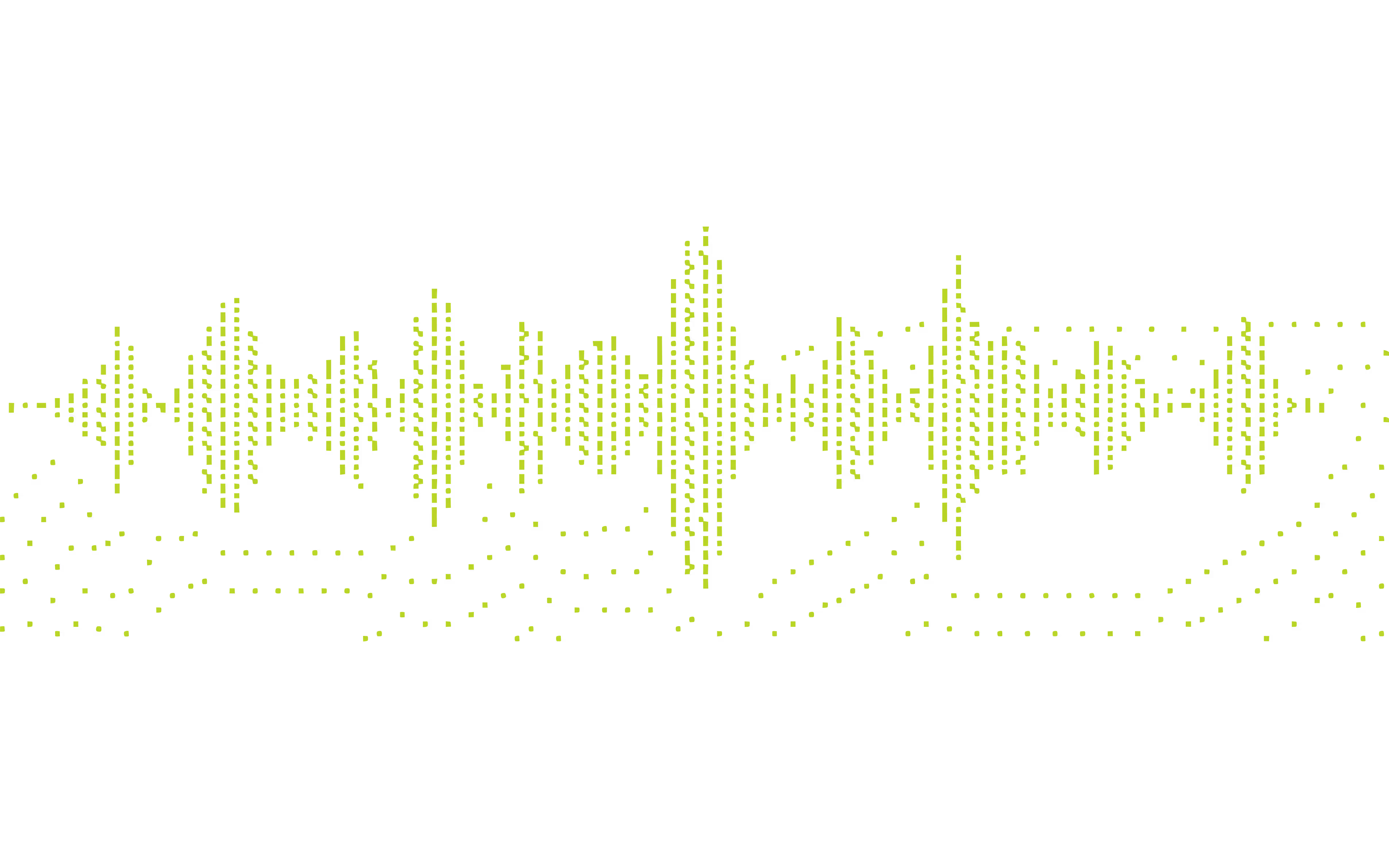
The Data Gap Behind Every Transformer Risk Decision.
That is the baseline risk that scheduled inspection data does not capture. It is the risk that VIE continuous monitoring makes visible — and actionable — before it becomes a claim.
Transformer risk pricing has historically relied on what can be measured at a point in time: oil test results, inspection records, age, and historical loss data. Those inputs are accurate as of the moment they were collected. They say nothing about what happens in the weeks and months that follow.
An independent KPMG study (2025) analyzed nearly 1,000 days of transformer operational data across a fleet of more than 700 assets at U.S. data centers. The empirically observed annual failure rate was 1.79% —consistent with OEM projections, and translating to a transformer failure event approximately every 33 days across a large unmonitored fleet.
Every 33 days.
That is the empirical transformer failure frequency across an unmonitored fleet, per anindependent KPMG study (2025).
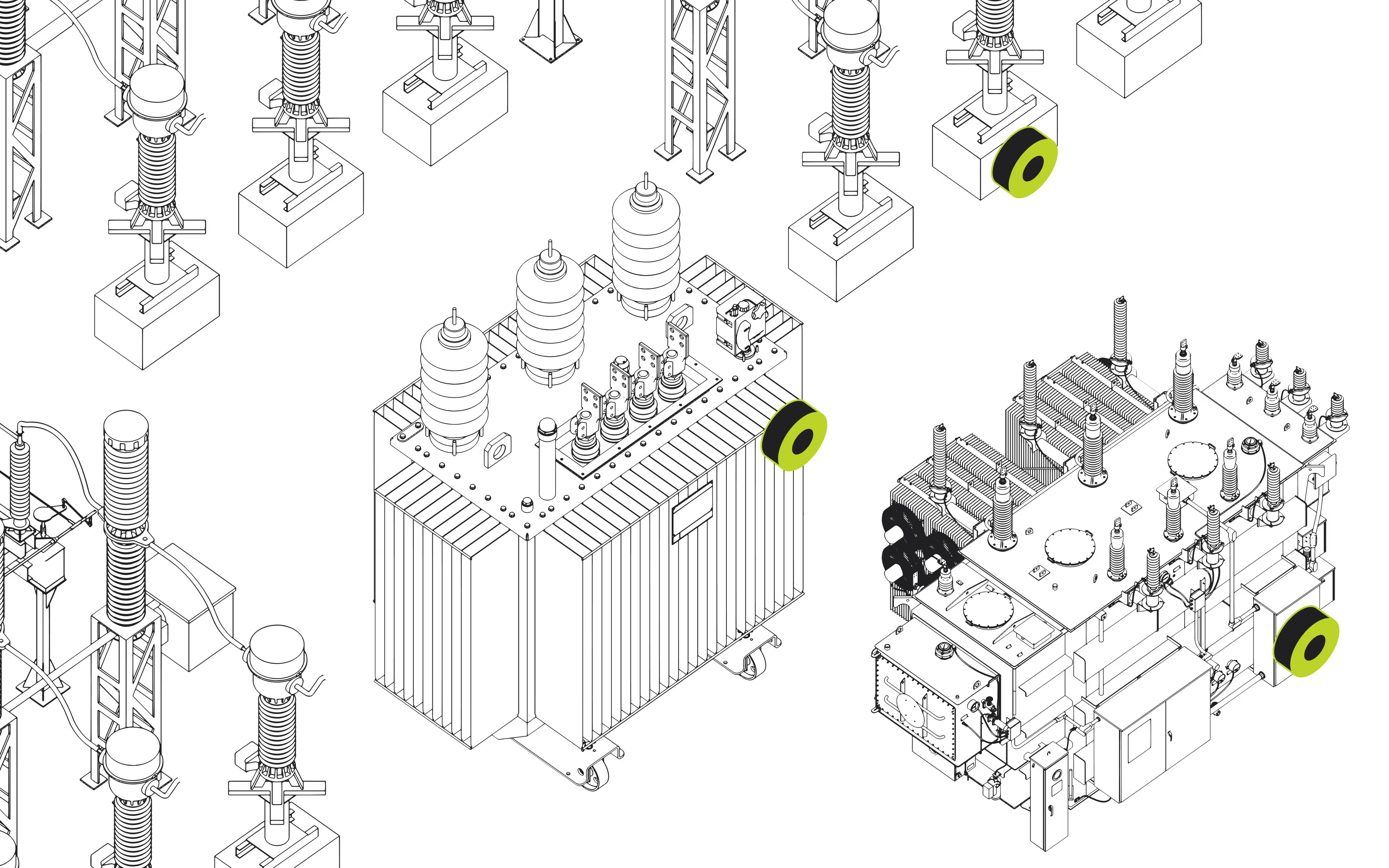
The Shift Risk Professionals Are Already Making
The most sophisticated risk professionals in this market are already moving from static inspection data toward continuous condition intelligence. The question is not whether to make the transition. The question is how fast — and which portfolios benefit first.

From
- Loss models built on historical claims from unmonitored fleets
- Inspection snapshots that go stale the day after they are issued
- Reserve assumptions based on statistical failure rates, not demonstrated asset health
- Reactive claims handling after failure events that were preventable
To
- Real-time health data that reflects actual asset condition between inspections
- Continuous, timestamped records that support underwriting and due diligence
- Reserve sizing informed by demonstrated operational stability, not statistical averages
- Proactive loss prevention actions taken months before claims develop
What VIE Delivers for Risk and Insurance Professionals
VIE converts transformer asset risk from a guess into a continuously updated measurement. The platform builds a virtual model from each transformer’s geometry and refines it with every sample — detecting deviation from expected behavior months before failure, generating an auditable record the moment sensors go live.
What the KPMG Data Shows for Underwriting
The KPMG study provides actuarially relevant data points for transformer risk conversations.
1.79%
Empirically observed annual transformer failure rate across a large U.S. data center fleet
Every 33 Days
Frequency of transformer failure events in an unmonitored fleet (KPMG, 2025)
$2–5M
Typical cost of a single catastrophic transformer failure (KPMG study, 16 data centers)
Zero
VIE-monitored transformer failures during the 995-day KPMG observation period
Source: Independent KPMG study (2025). Analysis of 700+ transformers across U.S. data centers.
For Insurers:
What Continuous Monitoring Changes
Loss models built on historical claims data assume failure rates that reflect an unmonitored fleet. A continuously monitored fleet has a fundamentally different risk profile. Zero failures occurred in VIE-monitored assets during the KPMG observation period. That is not a product claim — it is an empirical finding from nearly three years of operational data.
For insurers pricing transformer coverage, VIE monitoring status is a variable that changes the risk calculation. For underwriters structuring data center or infrastructure ABS transactions, VIE documentation is evidence of active condition management — supporting tighter reserve assumptions and stronger Debt Service Coverage Ratio (DSCR) projections.
For both, VIE produces an auditable, continuous health record that a claims investigation or due diligence process can rely on, rather than a point-in-time inspection report that goes stale the day after it is issued.
The Securitization Market
Has Already Priced This Risk
The U.S. data center ABS market generates approximately $65 billion in annual securitization issuance. It is the dominant funding source for the sector — and it is increasingly sensitive to the operational factors that drive cashflow reliability.
KPMG’s securitization advisory practice has worked with more than 30 data center owners, operators, investors, and capital market participants. AI-enabled predictive maintenance systems are now recognized as assets in securitization due diligence. They reduce the variance in operating expense projections, improve cashflow predictability to debt holders, and reduce the conditions that trigger adverse covenant tests.
An operator that documents continuous transformer health monitoring has a demonstrably different risk profile than one that cannot. VIE produces that documentation from the moment sensors go live.
Source: KPMG securitization advisory practice (2025).
By the Numbers
Reported False Positives in KPMG 995-day study
Empirical annual failure rate in an unmonitored fleet
Projected 3-year savings at empirical failure rates
ROI at observed failure rate, 3-year horizon
Frequently Asked Questions
VIE provides a continuous, timestamped record of transformer health — replacing point-in-time inspection snapshots with an auditable condition history. That record is directly relevant to underwriting conversations about asset condition, maintenance practices, and demonstrated risk management.
The KPMG empirical data is clear: over 995 days, zero transformers with VIE sensors installed experienced a failure. Failure rates across the observed fleet dropped as VIE installation rates rose. Early detection converts failure events into planned maintenance interventions.
Yes. VIE’s platform generates exportable, audit-ready maintenance and health records. KPMG’s securitization advisory practice identified continuous monitoring documentation as a recognized factor in improving securitization cashflow modeling, DSCR projections, and reserve sizing assumptions.
VIE establishes a machine health baseline for each monitored asset within 30 days. From that point forward, the platform generates a continuous, timestamped record of every health data point, alert, and maintenance event.
No. VIE sensors mount to the external surface of the transformer tank. The transformer stays fully energized throughout the entire installation process. There is no maintenance window, no de-energization, and no IT involvement required.
Visibility Changes the Risk Equation.
The transformer risk you cannot see is the transformer risk that generates claims. VIE makes it visible — months ahead of failure, continuously, with an auditable record from day one.
VIE is deployed today across 1000+ transformers globally. One sensor failure and zero gateway failures since launch.