Renewables
Solar farms tax
transformers, and
remote sites make
it even worse.
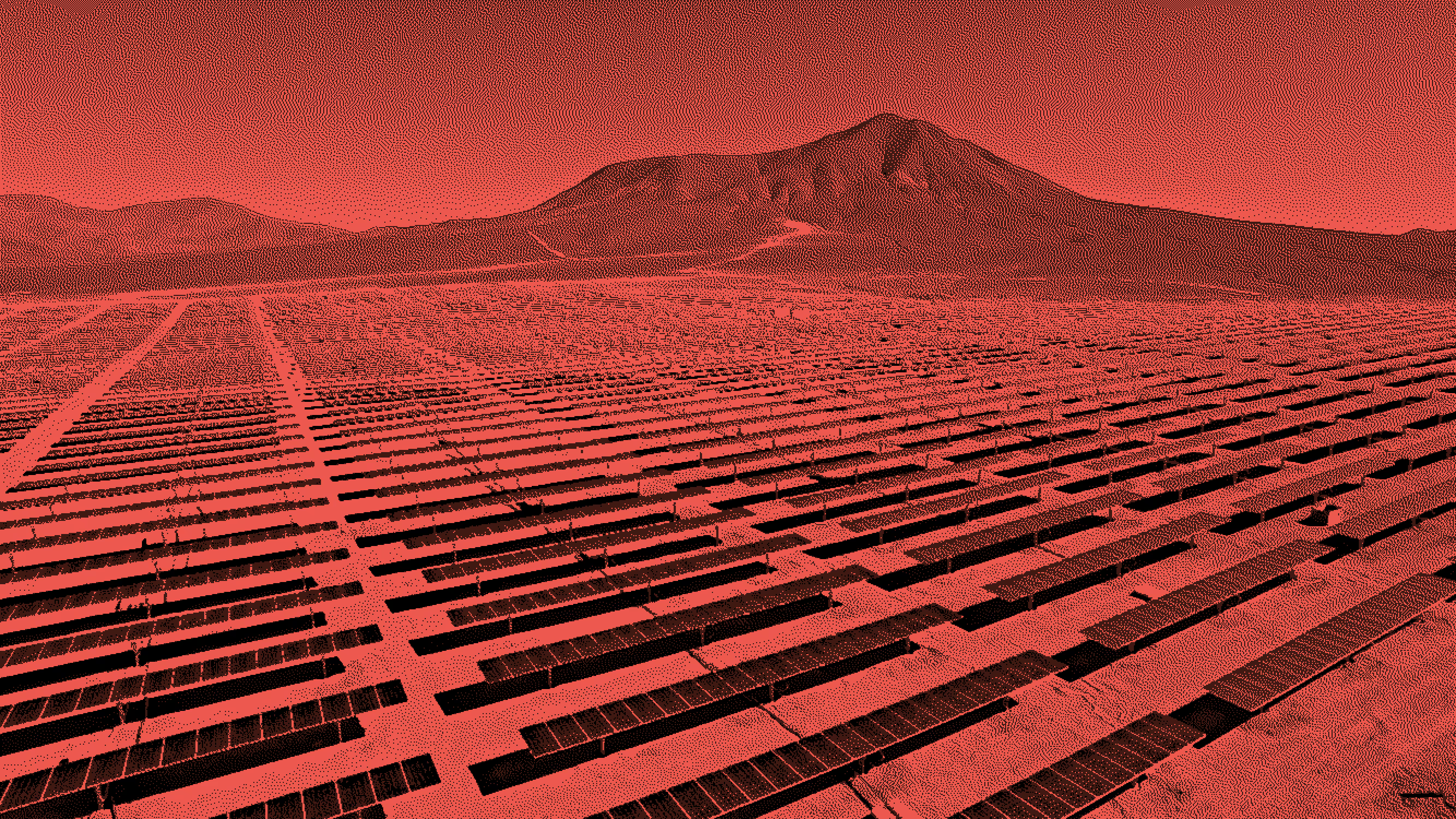
Utility-scale solar operators work on thin margins with investor performance guarantees, PPA delivery commitments, and capacity payment obligations tied directly to uptime. A single transformer failure at a remote site can cost far more than the asset itself: emergency logistics, missed delivery, and downstream impact on project financing compound quickly.
The problem is not just failure. Solar operating environments are unusually hard on transformer insulation and windings, and most fleets do not know the actual condition of their assets between scheduled inspections.
VIE changes that. Continuous transformer intelligence, deployed without shutdowns, operating through LTE or satellite from any site on earth.
The Monitoring Gap That Solar Operators Cannot Afford
Scheduled inspections and periodic oil analysis share the same flaw across every renewable fleet: they sample a transformer at one moment, then leave it unmonitored until the next visit. In a solar operating environment, that blind interval is where the damage accumulates.
Thermal cycling stress from daily on/off cycles. Harmonic loading from inverter conversion. High ambient temperatures at open-terrain sites. These stressors compound quietly between inspection windows. By the time a conventional test catches them, the intervention window is often already closing, measured against a 3 to 5 year transformer replacement timeline.
Remote site logistics compound the problem further. A transformer failure at a site 200 miles from the nearest service depot does not stay a maintenance issue for long. It becomes an emergency, a missed PPA delivery, and a conversation with your lender.
3 to 6 months
That is the typical lead time between
a VIE detection and a failure event.
The Transition Renewable Operators Are Already Making
Every major renewable portfolio is moving from time-based inspection schedules toward continuous condition intelligence. Distributed sites and thin O&M margins have made that transition a financial necessity. The question is no longer whether to make it. The question is how fast.

From
- Threshold alarms that trigger only when failure has already begun
- Periodic inspections that cannot scale across distributed portfolios
- No fleet-level visibility between site visits
- Reactive maintenance that disrupts production windows and violates PPA commitments
To
- Early failure mode identification weeks to months before the failure event
- 24/7 visibility across every site in the portfolio — no gaps between visits
- Condition-based maintenance that concentrates resources where the risk is highest
- Planned interventions scheduled during low-generation windows — not around failures
What VIE Delivers for Renewable Operators
VIE converts transformer fleet management from a reactive process into a continuous operating system. The platform builds a virtual model from each transformer’s geometry and refines it with every sample — detecting deviation from expected behavior months before failure, without waiting for a scheduled inspection or an on-site crew.
Why Solar is Unusually Taxing on Transformers
Solar transformers degrade faster than baseload transformers. Four distinct stressors accelerate that degradation — and most monitoring approaches are not designed to catch them.
Frequent Thermal Cycling from Daily On/Off Cycles and Irradiance Variation
Unlike baseload power plants, solar farms cycle daily — powering up at dawn, ramping with cloud cover and irradiance fluctuation, and shutting down at dusk. This constant thermal cycling creates mechanical stress on transformer windings and insulation. The expansion and contraction compound over thousands of cycles.
Harmonic Distortion from Inverter DC-to-AC Conversion
Solar inverters introduce harmonic distortions into the electrical system during DC-to-AC conversion. Those harmonics produce additional heating inside the transformer — beyond what the thermal design accounts for — accelerating insulation deradation in ways that oil sampling alone cannot detect between test windows.
High Ambient Temperatures at Open Solar Farm Sites
Solar farms are sited for maximum irradiance — which means open terrain, direct sun exposure, and high ambient temperatures. Elevated temperatures accelerate the chemical reactions that break down transformer oil and insulation. The hotter the operating environment, the faster the degradation clock runs.
Remote and Distributed Locations
Many utility-scale solar sites are in remote locations where manual inspection is logistically expensive, operationally disruptive, and in some cases hazardous. Routine physical inspection across a distributed portfolio is not a scalable maintenance strategy.
Early Detection Protects the
Production Commitment
Thin margins do not survive unplanned outages. Investor guarantees do not absorb emergency logistics at a remote site when a replacement transformer is 80 to 120 weeks out on lead time. A failure that could have been a planned maintenance event becomes a conversation with your lender about missed production targets.
Every month of advance warning has measurable financial value in a portfolio structured around performance guarantees. VIE provides months.
VIE detects electrical, mechanical, and thermal failure modes 3 to 6 months before the failure event — at remote sites, on any transformer type, without de-energization.
Portfolio Intelligence Across Every Site
VIE’s gateway connects via LTE or satellite from day one. No site network required. No IT team. No integration project. A new site is online in hours — sensors installed, monitoring active, data flowing into the portfolio dashboard before the crew leaves the site.
Every health record VIE generates is exportable and audit-ready — supporting ESG disclosures, lender reporting, and performance guarantee documentation for offtake partners and project finance counterparties.
By the Numbers
Transformers monitored globally
Prediction accuracy
ROI delivered in months (KPMG-validated)
To machine health baseline per asset
Frequently Asked Questions
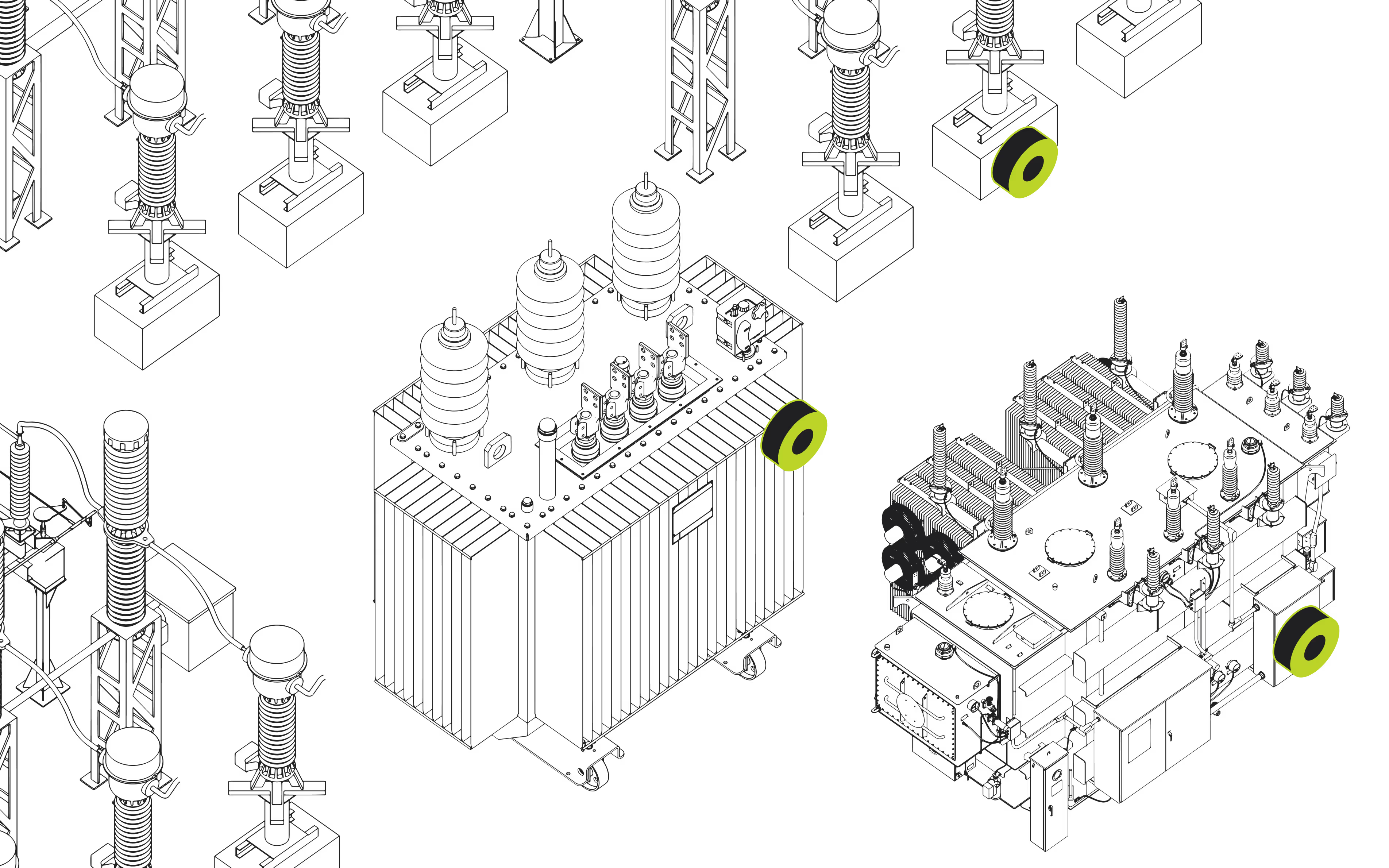
Yes. VIE sensors install on the external surface of any transformer — wet or dry, pad-mount or substation, any make, model, voltage class, or vintage. The platform works on the step-up transformers used at utility-scale solar sites, including both medium and high voltage configurations.
Yes. The VIE gateway connects to the cloud via LTE or satellite. No existing site network is required. VIE operates continuously at remote and unmanned solar sites without a physical visit for data retrieval.
VIE establishes a machine health baseline for each monitored asset within 30 days of sensor installation. From that point, the platform tracks condition trends continuously — detecting deviations as they develop, months before they would register on a scheduled inspection.
No. VIE sensors install on energized transformers. The solar farm continues generating throughout the full installation process. One transformer takes under 30 minutes.
Your Portfolio Is Distributed. Your Risk Visibility Should Be Too.
Thin margins do not survive unplanned outages. Investor guarantees do not absorb emergency logistics at a remote site 200 miles from the nearest service crew. VIE gives your fleet the visibility it needs to keep every performance commitment, at every site.
VIE is deployed today across 1000+ transformers globally. One sensor failure and zero gateway failures since launch.