NFPA-70B 2023 Compliance Guide for Transformer Operators
What the standard requires. What operators must do. How VIE delivers compliance in under 30 days.

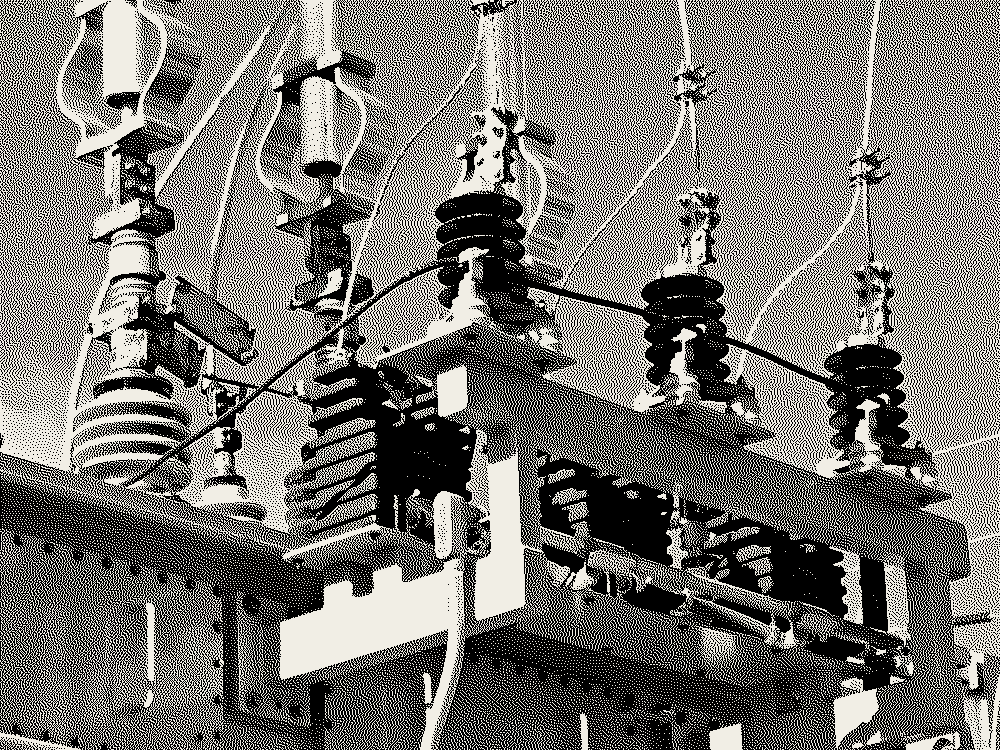
NFPA 70B-2023 changed the legal landscape for transformer maintenance.
Executive Summary
The 2023 edition converted a recommended practice into a mandatory standard and replaced time-based inspection schedules with a requirement for condition-based maintenance of critical electrical assets.
For transformer operators — electric utilities, grid operators, and any organization managing substation equipment — this is not a future compliance obligation. It is a present one. The standard is in effect. The documentation requirements are auditable. The liability for non-compliance falls on the asset owner. This guide explains what NFPA 70B-2023 requires, who is affected, what condition-based maintenance means in practice, and what a compliant transformer monitoring program looks like from deployment to documentation.
VIE Technologies is the only fully autonomous, non-invasive AI-powered monitoring platform purpose-built for transformer fleets. Our platform is deployed on 700+ transformers globally, achieves 95%+ prediction accuracy, and establishes a machine health baseline in under 30 days. KPMG has validated our ROI results. Customers see 3 to 10 times return on investment, typically within months.
This guide is not a product brochure. It is the most complete, freely available explanation of NFPA 70B-2023 compliance requirements for transformer operators we know of. Use it.
What NFPA 70B-2023 Changed
From Recommended Practice to Mandatory Standard
Before 2023, NFPA 70B was a recommended practice. Organizations could adopt its guidance or not. The 2023 edition changed that. It is now a mandatory standard for the maintenance of electrical equipment in commercial, industrial, and institutional facilities.
The practical consequence is significant. Where the pre-2023 document offered guidance, the 2023 edition creates requirements. Where utilities could exercise discretion over inspection methods and intervals, the 2023 edition constrains that discretion for critical assets.
The Core Shift: Condition-Based Maintenance
The most consequential change in NFPA 70B-2023 is the requirement for condition-based maintenance (CBM) for critical electrical equipment where economically justified.
Time-based maintenance — the practice of scheduling inspections at fixed intervals regardless of asset condition — is no longer adequate for critical assets under the 2023 standard. The standard recognizes that point-in-time testing produces a snapshot of asset condition on one day. For assets whose failure can cost $3 to $10 million per event and whose replacement lead time runs 80 to 210 weeks, a once-a-year snapshot is not a maintenance program.
Condition-based maintenance means continuous awareness of asset condition. It means monitoring methods that run between inspections, not in place of them. It means documentation that reflects real-time asset health, not just the date of the last test.
Who Is Affected and When
Who NFPA 70B-2023 Applies To
NFPA 70B-2023 applies to organizations responsible for the maintenance of electrical equipment used in commercial, industrial, and institutional facilities. For transformer operators, the most directly affected are:
Electric utilities and grid operators managing substation transformer fleets. These are the assets NFPA 70B-2023 is most directly designed to address. 90% of US electricity passes through a large power transformer. The consequences of failure at this level — community outages, GDP disruption, replacement timelines measured in years — are exactly what the standard is designed to prevent.
Industrial facilities with on-site transformer infrastructure, including refineries, data centers, manufacturing plants, and any facility with critical electrical assets that, if offline, would cause significant operational or safety consequences.
Facility managers and asset owners who carry the compliance documentation burden. When an auditor asks for evidence of a condition-based maintenance program, the asset owner provides it — or cannot.
When Compliance Is Required
NFPA 70B-2023 is in effect now. There is no grace period built into the standard. The practical timeline for compliance depends on:
Asset criticality assessment (Clause 5.2): The standard requires assets to be prioritized based on criticality for operations, safety, and reliability. Operators with large fleets should identify their highest-risk transformers first. This assessment can be completed in one day.
Monitoring program deployment: For assets identified as critical, condition-based monitoring must be in place. VIE's platform installs without taking the asset offline, establishes a machine health baseline in under 30 days, and begins generating compliance documentation from day one.
Documentation readiness: An audit-ready compliance record exists from the moment continuous monitoring begins. The baseline period — the first 30 days — gives auditors the context to interpret the data. Full compliance documentation is in place within one month of deployment.
What Condition-Based Maintenance Means in Practice
The Difference That Matters
Time-based maintenance is what most transformer fleets have done for decades. Send a crew on a schedule. Run a dissolved gas analysis. Log the results. File the report. Repeat next year.
The problem is not that this approach produces bad data. It is that it produces no data in between visits. A transformer can develop a fault, progress through early-stage degradation, and approach failure in the 11 months between annual inspections. The DGA taken at month 12 reflects asset condition on that day. It does not reflect the 330 days before it.
NFPA 70B-2023's condition-based maintenance requirement is a formal recognition of that gap.
Condition-based maintenance means the monitoring method runs continuously, not on a calendar. It means the documentation reflects what the asset is doing today, not what it was doing at the last inspection. It means alerts are generated by asset condition data, not by an approaching inspection date.
What CBM Requires Operationally
For transformer operators implementing condition-based maintenance under NFPA 70B-2023, three operational requirements follow:
- A monitoring method that runs between inspections. The monitoring system must collect data on a continuous or near-continuous basis. Periodic manual testing — DGA, insulation resistance, power factor — supplements continuous monitoring. It does not satisfy the CBM requirement on its own.
- Documentation that reflects real-time condition. The standard requires maintenance documentation to be accessible and up-to-date (Clause 4.2). Audit-ready documentation under CBM means timestamped condition records, flagged anomalies with recommended actions, and trend data showing how the asset has behaved over time.
- A maintenance response triggered by condition data. CBM is not just monitoring — it is monitoring that informs maintenance decisions. A program that monitors continuously but does not act on condition signals does not satisfy the intent of the standard.
What VIE Delivers Against Each Requirement
VIE's platform generates continuous vibration, thermal, and oil health readings across every monitored transformer. Every reading is logged and timestamped. Every alert documents the metric that triggered it, the threshold exceeded, and the recommended action. The platform's 95%+ prediction accuracy means the alerts that generate compliance documentation are grounded in validated data.
VIE detects developing faults 3 to 6 months before the failure event. In one case, VIE identified a fault on a transformer that a recent DGA test had cleared as healthy. The fault was real. The monitoring record documented exactly when and how the anomaly developed — the kind of evidence that satisfies an auditor and prevents a failure event.
NFPA 70B-2023 Clause Alignment
Documentation Requirements: What Auditors Actually Look For
NFPA 70B-2023 does not prescribe a documentation format. It requires that maintenance records be accessible, up-to-date, and sufficient to demonstrate that a condition-based maintenance program is in place and operating. An audit-ready compliance record contains:
Continuous condition monitoring records. Timestamped readings across the monitored parameters showing that the asset is being watched in real time, not just checked periodically.
Alert and anomaly records. Documentation of every flagged condition, including what triggered the alert, when it was flagged, and what action was taken or recommended. An alert without a documented response is incomplete.
Asset health trend data. Evidence that the monitoring program tracks asset condition over time. Trend data shows the direction an asset is moving, not just its condition on any given day.
Criticality assessment documentation. Per Clause 5.2, the record of which assets were identified as critical and on what basis. This is a one-time assessment that does not need to be repeated unless the asset's operational role changes.
Maintenance response records. Evidence that condition data has informed maintenance decisions. A program that monitors and never acts on the data does not satisfy the CBM intent.
VIE's platform generates all five categories automatically from deployment. No manual assembly is required for an audit. The documentation exists as a continuous record from the moment monitoring begins.
Deployment Timeline: Decision to Compliance-Ready
Criticality Assessment | Day 1. Identify highest-risk transformers using operational and safety criteria (Clause 5.2). Determine deployment sequence.
Sensor Installation | Day 1–2. Non-invasive sensors attach to transformer surface. No de-energization. No IT involvement. Each sensor kit installs in under 30 minutes. Gateway connects via LTE or satellite. Same day.
Platform Configuration | Day 2. Alert thresholds configured. Auto-logging enabled. myVIE dashboard accessible. Compliance documentation begins generating immediately.
Baseline Period | Days 2–30. Platform collects operating data and builds a machine health baseline specific to each transformer. Anomalies flagged against each asset's own operating signature, not generic thresholds.
Compliance-Ready | Day 30. Full machine health baseline established. Continuous condition records in place. Alert and response documentation active. Audit-ready compliance record exists.
Total time from installation to compliance-ready: under 30 days.
This timeline does not require IT project approval, infrastructure modifications, or transformer downtime. VIE installs on live, energized equipment without touching transformer internals.
ROI: The Math on Compliance vs. Non-Compliance
The Cost of a Transformer Failure
A single failed large power transformer costs $3 to $10 million per event — equipment, cleanup, and lost revenue combined. Replacement lead times run 80 to 210 weeks. The average US customer experienced 11 hours of outage in 2024, nearly twice the prior decade's average. A single one-day widespread power interruption reduces a utility service area's quarterly GDP by 1.3%, roughly $1.8 billion.
The Cost of Compliance
VIE's platform delivers 3 to 10 times ROI, typically within months of deployment. KPMG has independently validated these results. The payback window for a predictive monitoring deployment is 9 to 15 months — measured against the cost of one prevented failure event, often a fraction of that timeline.
The compliance investment does not sit on top of existing maintenance budgets as an additional cost. For most transformer fleets, condition-based monitoring replaces or reduces periodic inspection costs while adding continuous intelligence that periodic inspection cannot provide.
$10M Per Failure vs. 10x ROIA single failed large power transformer costs $3 to $10 million per event. VIE deployment delivers 3 to 10 times return on investment, typically within months.
The Liability Calculation
Compliance with a mandatory standard creates a documented record of due diligence. Non-compliance creates the opposite: a record that an operator was aware of a requirement and did not act on it. That record becomes relevant in the conversation that follows an unplanned failure — with regulators, with insurers, and with the board.
The economic case for compliance is straightforward. KPMG has validated it. What remains is the operational question: how quickly can a compliant monitoring program be deployed? Under 30 days is the answer.
The VIE Platform: What It Monitors and How
VIE's platform is built on surface-mounted sensors that attach non-invasively to the transformer. No modification to the asset. No downtime. Works on transformers of any make, model, voltage, age, or fluid type — wet or dry.
The platform monitors four categories of transformer health:
Platform reliability: 99.95% sensor reliability. 100% gateway reliability. One sensor failure total since launch. Zero gateway failures.
Connectivity: LTE and satellite. Secure monitoring via myVIE web and mobile dashboard. No IT infrastructure requirements.
The Case That Changed How We Think About DGA
Dissolved gas analysis has been the standard diagnostic tool for transformer health for decades. It is accurate. It is established. It is also a point-in-time measurement taken at whatever interval the maintenance schedule allows.
In one documented deployment, VIE's monitoring platform flagged a developing fault on a transformer that a recent DGA test had cleared as healthy. The vibration and thermal signatures had shifted from the asset's own baseline. The shift was not dramatic. It was consistent. And it was pointing in one direction.
Follow-up DGA confirmed the fault. The transformer had a real problem. The DGA taken weeks earlier had not detected it — not because DGA failed, but because the fault had developed in the interval between the sample and the flag.
This case is not a critique of DGA. It is a demonstration of what leading-indicator monitoring adds to a program that already uses it. VIE and DGA together cover more of the transformer failure timeline than either covers alone.
That is what NFPA 70B-2023's condition-based maintenance requirement is designed to produce: not the replacement of existing methods, but a monitoring program comprehensive enough that faults do not develop undetected in the gaps.
The Standard Is in Effect. The Path Is Clear.
NFPA 70B-2023 is not a future compliance consideration. It is a present requirement for transformer operators managing critical electrical infrastructure.
The standard requires condition-based maintenance. Condition-based maintenance requires continuous monitoring. Continuous monitoring requires a platform that installs without downtime, generates audit-ready documentation from day one, and watches every transformer in the fleet every day.
VIE's platform does all three. It is deployed on 700+ transformers globally. It detects failures 3 to 6 months before the failure event. Its ROI results are KPMG-validated. And it establishes a complete compliance record in under 30 days.
The grid is aging. The standard is in effect. The technology is proven. The operators who move now will have a compliance record, a protected fleet, and a documented ROI before the next failure event finds them.
The ones who wait will have a different conversation.
NFPA 70B-2023 Compliance Checklist for Transformer Operators
Phase 1: Assessment
- Identify all transformers subject to NFPA 70B-2023 requirements
- Conduct criticality assessment per Clause 5.2
- Document the criticality assessment and retain for audit
- Review current maintenance program against CBM requirements — identify gaps
Phase 2: Deployment
- Install continuous monitoring on highest-criticality transformers first
- Confirm sensor installation without asset de-energization
- Verify gateway connectivity and cloud dashboard access
- Enable auto-logging and configure alert thresholds
- Confirm baseline data collection is active
Phase 3: Documentation
- Verify timestamped condition records are generating continuously
- Confirm alert records include: metric triggered, threshold, recommended action
- Establish process for documenting maintenance response to flagged conditions
- Set export schedule for audit-ready report generation
- Confirm documentation accessibility per Clause 4.2
Phase 4: Audit Readiness
- Compliance documentation accessible to authorized personnel on demand
- Trend data available showing asset condition history
- Maintenance response records complete for all flagged alerts
- Criticality assessment documentation current and on file
- Remote monitoring records demonstrate continuous operation between physical inspections