Continuous Transformer Condition Data and ISO 14224
What the standard requires. Where continuous transformer condition data fits. Where the operator still owns the record.

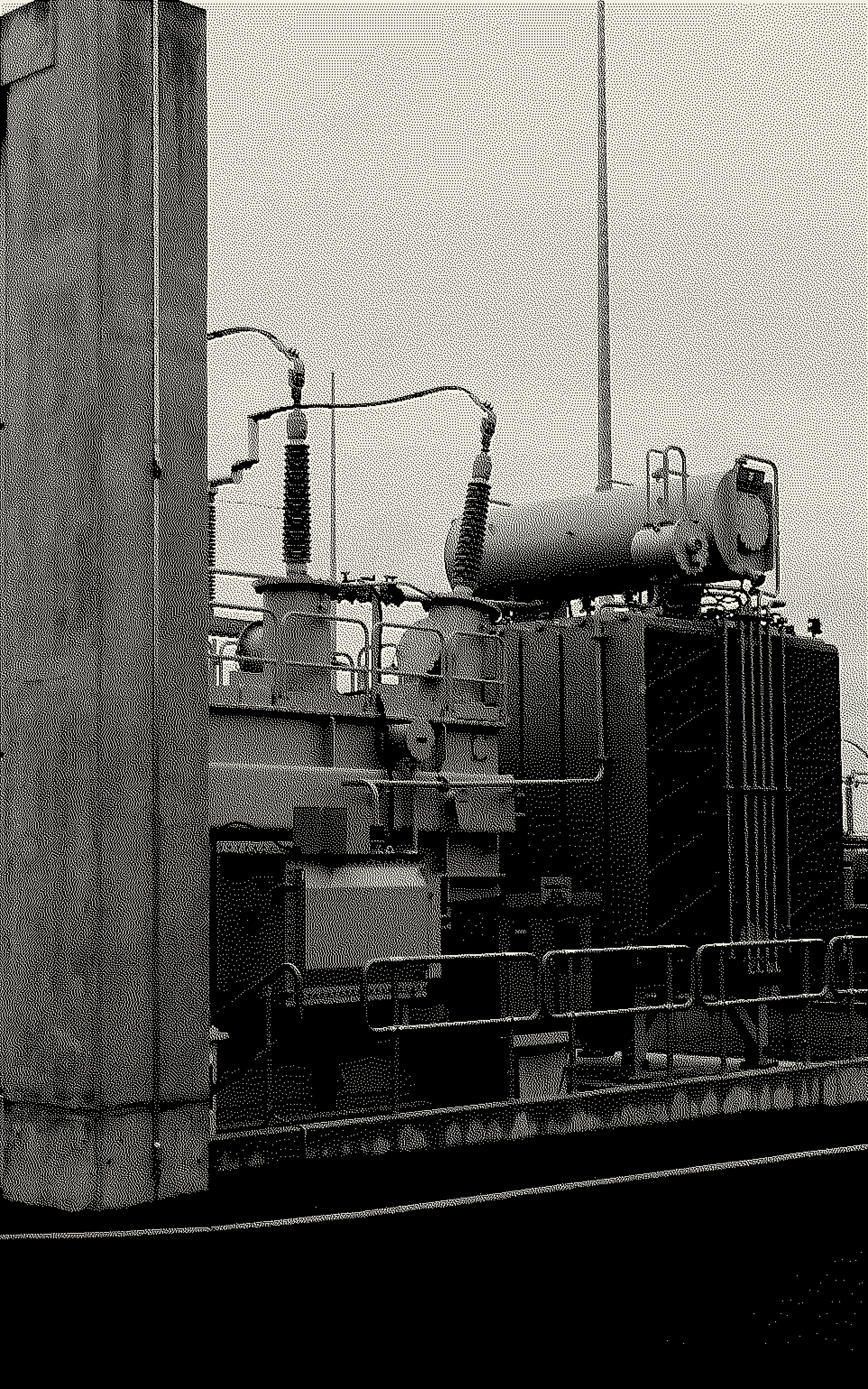
Closing the reliability data gap for transformer fleets.
Executive Summary
Operators of power transformers in oil and gas, petrochemical, utility, and data center facilities increasingly build their reliability programs around ISO 14224, the international standard for collecting and exchanging reliability and maintenance data for equipment. The standard is demanding. It requires consistent equipment classification, documented failure modes, traceable data origin, and a maintenance history that together support fleet-wide reliability analysis.
Most transformer fleets fall short of this standard for a simple reason. Periodic inspection produces a data point every one to five years. ISO 14224 asks for a continuously maintained reliability record. Continuous condition monitoring closes that gap. This paper maps the VIE platform to the specific clauses and annexes of ISO 14224:2016 it supports, states plainly where the standard's requirements fall to the operator's own maintenance systems, and lays out a practical path to implementation.
The reliability data problem in transformer fleets
A transformer fleet's reliability data is only as good as its weakest input. Dissolved Gas Analysis (DGA) and other periodic tests provide a trusted, laboratory grade reading, but only on the day the sample is drawn. Between tests, the equipment record goes dark. A developing mechanical fault, a winding degradation, or a shifting core clamp can progress for months before the next scheduled inspection captures it.
This gap matters more as fleets age and load profiles change. Aging insulation accelerates non-linearly with temperature. Renewable integration and electrification are pushing load and harmonic content higher on transformers designed for a different era. A reliability database built on sparse, point in time inspection data cannot keep pace with equipment that is aging and working harder at the same time.
ISO 14224 was written to solve a related but distinct problem: making reliability data comparable across plants, owners, manufacturers, and contractors. It assumes a steady, well-structured stream of equipment, failure, and maintenance data. Continuous monitoring is what makes that assumption realistic for transformer fleets rather than aspirational.
ISO 14224:2016 at a glance
ISO 14224:2016, Petroleum, petrochemical and natural gas industries: collection and exchange of reliability and maintenance data for equipment, defines the minimum data an operator must collect to support reliability, availability, maintenance, and safety analysis, and it standardizes the data format so it can be exchanged and benchmarked across sites. Although written for the oil, gas, and petrochemical sector, its equipment taxonomy explicitly includes power transformers, and utilities and data center operators have adopted its structure as a best practice framework.
Three data categories
Equipment data. Taxonomy classification and equipment attributes, covered in Clause 8.
Failure data. Failure cause, mode, mechanism, and consequence, covered in Clause 9 and detailed in Annex B.
Maintenance data. Maintenance action, resources used, and downtime, covered in Clause 9.
The nine level taxonomy
The standard organizes equipment in a nine-level hierarchy running from industry segment down to maintainable item, so that every failure record traces back to a specific, comparable physical component. Equipment classes and their recommended boundary diagrams are listed in Annex A, which includes power transformers as a defined class at Level 6, with maintainable items detailed below it.
Data quality and severity classification
Clause 7 sets requirements for data quality and assurance, including documented traceability of data origin and confirmation that source data comes from equipment of similar type, technology, and operating conditions. Clause 3 defines the three-tier failure severity model used throughout the standard: critical failure (immediate loss of function), degraded failure (one or more functions compromised but not lost), and incipient failure (an early imperfection that may or may not progress to a degraded or critical state if left unaddressed).
Reliability KPIs
Annex E defines the reliability and maintenance key performance indicators, such as failure rate and availability, that a well populated ISO 14224 database supports. Annex F aligns the standard's failure classifications with ISO/TR 12489 for quantitative reliability modeling.
Where continuous monitoring fits
The table below maps each relevant ISO 14224:2016 provision to what VIE contributes. Every entry is stated at the level of precision the standard actually requires, without overstating what continuous monitoring can or cannot see inside a transformer.
The physics behind the data
VIE fuses four continuous signal types: triaxial vibration, thermal, magnetic field, and local weather data, evaluated against a physics based virtual model of the specific transformer being monitored. Because the model is built from first principles rather than learned from a population of similar units, a clean reading is affirmative evidence of health, and a developing anomaly is detectable as it forms rather than after it has already progressed to a measurable chemical or dimensional change.
This distinguishes leading indicators from lagging ones. Dissolved gas analysis remains the trusted, chemistry-based standard for gas generating faults such as arcing and partial discharge, and VIE is a complement to it, not a replacement. What continuous monitoring adds is visibility into mechanical and structural failure modes, such as winding or core looseness and clamping pressure loss, that generate no gas and would otherwise stay invisible between test cycles.
The result for a reliability engineerA failure record that begins at the incipient stage, with weeks or months of trend data behind it, rather than a single degraded or critical entry discovered at the next scheduled inspection.
Scope and boundaries
A reliability program built on an inflated claim is a liability, not an asset. The following boundaries are stated plainly so that any ISO 14224 program built around VIE is built on an accurate foundation.
VIE is a continuous data source, not a CMMS or EAM system. Maintenance actions, resources used, and downtime records, also required under Clause 9, are logged in the customer's own maintenance system, not in VIE.
Data reaches the customer's systems through VIE's REST API. The customer's team or integrator uses that API to populate the reliability database or CMMS.
VIE identifies failure mode type, severity, and trajectory, and recommends confirmatory diagnostics. It does not localize a fault to an exact internal component the way a factory acceptance test or a teardown inspection can.
Taxonomy coding at the nine-level hierarchy is performed by the customer's reliability engineering team or CMMS configuration, using VIE's equipment attributes as an input.
VIE Technologies is not a certifying body. Any statement that a customer's reliability program meets ISO 14224 is the customer's own to make, based on their complete data system.
Implementation path
A typical path from onboarding to a functioning ISO 14224 aligned data flow follows five steps.
- Classify each monitored transformer in the customer's taxonomy at the power transformer equipment class, using attributes captured at onboarding.
- Connect VIE's REST API to the customer's reliability database or CMMS so continuous condition data and failure mode alerts stream in, tagged by transformer and timestamp.
- Map VIE's severity output, incipient, degraded, or critical, to the corresponding failure mode code in the customer's system.
- Log maintenance actions taken in response, and their outcomes, in the customer's maintenance system, closing the loop between failure data and maintenance data.
- Calculate fleet level reliability KPIs from the combined dataset on the customer's own reporting cadence.
Business value beyond compliance
A stronger reliability database is not the end goal. It is the mechanism for four outcomes that matter to fleet operators directly.
Conclusion
ISO 14224 sets a high bar for reliability data. Periodic inspection alone cannot clear it for transformer fleets, because the standard assumes a continuously maintained record and periodic testing produces, at best, an occasional snapshot. Continuous condition monitoring is what makes the standard's assumptions realistic in practice.
VIE strengthens the equipment data, failure data, and data quality provisions of ISO 14224:2016 with continuous, physics based, leading indicator input. It does not replace the customer's maintenance system, does not assign taxonomy codes, and does not certify compliance. Positioned accurately, it is the data source that keeps a transformer fleet's reliability record current between the inspections that ISO 14224 was built around.